
If seeing a leopard in the wild is on your list, Okonjima Nature Reserve is one of the best places in Africa to try. This private reserve in central Namibia, home of the AfriCat Foundation, is known for carnivore conservation, expert tracking guides and some of the most reliable leopard sightings in the country. It also sits neatly on the road between Windhoek and Etosha. Here's what to expect and how to plan your stay.
Quick answer
- Where: central Namibia, between Okahandja and Otjiwarongo, about 2.5 to 3 hours north of Windhoek
- Known for: leopard tracking, carnivore conservation and the AfriCat Foundation
- Size: a fenced private reserve of roughly 200 km²
- Ideal stay: 1 to 2 nights, on the way to or from Etosha
- Best time: May to October, but activities run all year
What is Okonjima Nature Reserve?
Okonjima began as a cattle farm, where the family that owned it saw first-hand how farmers and predators came into conflict. Rather than remove the cats, they turned the farm into a reserve dedicated to protecting them. The AfriCat Foundation, a non-profit organisation, grew out of that work and focuses on research, education and finding ways for people and large carnivores to live side by side.
Today, Okonjima is a large private reserve of bushveld, rocky hills and grassland, where leopards, brown hyenas and other wildlife live freely. Many of the leopards are studied by researchers, which is why guides can track them so successfully. Your visit helps fund the conservation work.
What can you do at Okonjima?
The highlight
Leopard tracking
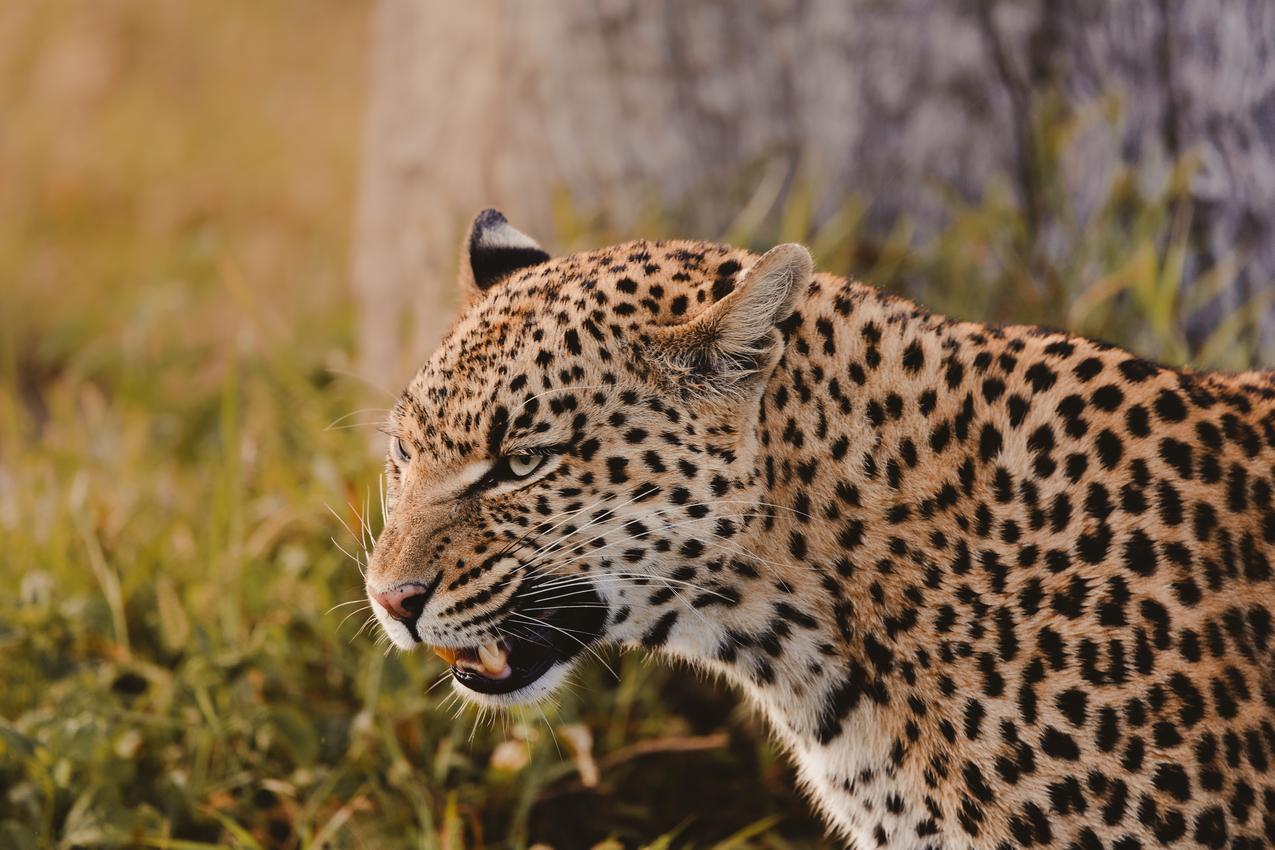
Guided drives follow leopards that researchers monitor, giving you a real chance to see one of Africa's most secretive cats in the wild. Sightings are never guaranteed, but they are far more likely here than in most places.
Conservation
Learn about carnivore conservation
Guides and the AfriCat team explain how they work with farmers to reduce conflict with predators, and why protecting cheetahs, leopards and hyenas matters for Namibia.
On foot
Guided walks
Walking trails with a guide reveal tracks, plants, birds and the smaller creatures you miss from a vehicle, including the armoured ground crickets that are common in the reserve.
After dark
Night drives and hides
Guided night drives and hides near the lodges offer chances to see nocturnal animals such as porcupines, brown hyenas and honey badgers.
Culture
Bushman trail
A walk that introduces the traditional knowledge of the San people: how they tracked animals, found water and used plants for food and medicine.
Activities and schedules can change with research needs and seasons, so confirm what's on offer when you book.
Where to stay at Okonjima
Okonjima has several places to stay inside the reserve, from comfortable chalets to more private, luxury options, all run in support of the conservation work. Most guests stay one or two nights, with activities in the early morning and late afternoon, and time to relax at the lodge in between. Rooms book up well ahead in the July to October high season, so reserve early if Okonjima is a must on your route.
How many nights do you need?
| Stay | What you can do |
|---|---|
| 1 night | An afternoon leopard drive, dinner and an early-morning activity before driving on |
| 2 nights | Leopard tracking, a guided walk, a night activity and time to relax |
| Day visit | Some activities can be booked by day visitors; check availability in advance |

Getting there
From Windhoek, drive north on the tarred B1 road towards Otjiwarongo. The turn-off to Okonjima is signposted, followed by a gravel road to the reserve. The trip takes about two and a half to three hours, so Okonjima is a perfect first stop after landing in Windhoek, or a last night before flying home. From Okonjima, Etosha's Andersson Gate is about three hours further north. Don't drive after dark.
When to visit
Okonjima is open all year. The dry season, from May to October, has mild days, cold nights and thin vegetation, which makes tracking easier. From November to April it's hotter and greener, with afternoon storms, but the bush is beautiful and birdlife is at its best. See our guide to the best time to visit Namibia.
Okonjima and Namibia's Big Five
Leopards are the hardest of the Big Five to find in most of Namibia, which is why so many travellers add Okonjima to their trip. Combined with Etosha's lions, elephants and black rhinos, and buffalo on the Waterberg Plateau or in the Zambezi Region, it gives you a real chance of seeing all five. Read our guide to the Big Five in Namibia.
Tips for your visit
- Book activities with your room: leopard drives have limited space.
- Bring binoculars and a zoom lens: leopards often rest in thick bush or on rocky ridges.
- Wear neutral colours and closed shoes for walks.
- Pack a warm layer: early mornings and evenings are cold from May to September.
- Be patient and quiet: tracking takes time, and the search is part of the experience.
- Support the work: ask how you can help the conservation programme after your stay.
What makes leopards so hard to see?
Leopards are solitary, mostly nocturnal and superbly camouflaged. They spend much of the day resting in thick bush, in rocky outcrops or up trees, and they avoid people. In big parks such as Etosha, you can drive for days without seeing one. At Okonjima, researchers know the individual leopards and their territories, so guides can search in the right places at the right time. You still need luck and patience, but your chances are far higher than almost anywhere else in Namibia.
Okonjima with children
Okonjima is a good stop for families who want to learn about wildlife as well as see it. The guides are excellent at explaining conservation in a way children understand, and the lodges have space to relax between activities. Some activities have minimum ages, so check when you book, and plan the leopard drive as the highlight of the stay.
- Ask about family rooms when you book.
- Pack snacks and water for the drives.
- Bring a small pair of binoculars for each child.
Whatever you see, a stay at Okonjima leaves you understanding Namibia's predators, and the people protecting them, far better than before.
A sample route with Okonjima
| Day | Route |
|---|---|
| Day 1 | Land in Windhoek; drive to Okonjima, afternoon leopard drive |
| Day 2 | Morning walk, then on to the Waterberg Plateau |
| Days 3–6 | Etosha National Park, west and east |
| Days 7–9 | Damaraland and Twyfelfontein |
| Days 10–12 | Swakopmund and Sossusvlei, then back to Windhoek |
We'll fit Okonjima into a self-drive or guided route that suits your dates. Start with Windhoek and where to stay in Etosha, or explore our Namibia tours.
Frequently asked questions
Where is Okonjima Nature Reserve?
Okonjima is in central Namibia, between Okahandja and Otjiwarongo, about 2.5 to 3 hours north of Windhoek on the way to Etosha.
Can you see leopards at Okonjima?
Okonjima offers some of the best chances of seeing a wild leopard in Namibia, on guided drives that follow leopards monitored by researchers. Sightings are likely but never guaranteed.
What is the AfriCat Foundation?
AfriCat is a non-profit organisation based at Okonjima that works on large carnivore conservation, research and education, helping farmers and predators live side by side.
How many nights should I stay at Okonjima?
One night allows a leopard drive and a morning activity. Two nights add a guided walk, a night activity and time to relax.
Is Okonjima worth visiting?
Yes, especially if you want to see a leopard. It also breaks up the drive between Windhoek and Etosha and supports carnivore conservation.
How far is Okonjima from Etosha?
Etosha's Andersson Gate is about three hours' drive north of Okonjima.
Add Okonjima to your trip
We'll fit Okonjima between Windhoek and Etosha, with the right nights and activities.
WhatsApp Us Explore Namibia Tours