
In Etosha National Park, the secret to great sightings is simple: find the right waterhole, park quietly and wait. Elephants arrive in dusty herds, lions crouch to drink, and black rhinos appear at the floodlit waterholes after dark. This guide covers the best Etosha waterholes in each part of the park, how to plan your game drives and where to stay.
Etosha at a glance
- Where: Northern Namibia, about 4.5 to 5 hours' drive from Windhoek
- Size: about 22,000 km², around a vast white salt pan
- Gates: Andersson (south), Von Lindequist (east), King Nehale (north) and Galton (west)
- Best season: July to October, when animals gather at the waterholes
- Ideal stay: 3 to 4 nights, split between the west and east of the park
Why waterholes are the key to Etosha
Etosha is built around the Etosha Pan, a shallow salt depression so large it can be seen from space. For most of the year the pan is dry, so the park's wildlife depends on a ring of natural springs and man-made waterholes along its southern edge. In the dry season, from about July to October, almost every animal in the area has to drink at one of them. That makes Etosha one of the easiest parks in Africa for a self-drive safari: you don't need to track animals, you just need to know where the water is.

Best waterholes near Okaukuejo (south-west)
Floodlit
Okaukuejo waterhole
Etosha's most famous waterhole sits right inside Okaukuejo camp and is floodlit at night. Sit on the benches after dinner and you may see black rhinos, elephants and lions drinking a few metres away. It is one of the best places in Africa to watch rhinos at night.
Lions on the pan
Okondeka
On the edge of the pan north of Okaukuejo, Okondeka is known for its resident lion pride. Wildebeest, zebra, springbok and gemsbok come to drink against a backdrop of endless white.
Plains game
Nebrownii and Gemsbokvlakte
Short drives from Okaukuejo, these open waterholes attract huge herds of zebra and springbok in the dry season, with elephants passing through in the afternoon.
Elephant country
Olifantsbad
As the name suggests ("elephant bath"), this is a reliable spot for elephant herds, set among mopane woodland south-east of Okaukuejo.
Best waterholes near Halali (central)
Floodlit
Moringa waterhole
Halali's floodlit waterhole sits below a rocky ridge just a short walk from the rooms. It is a good spot for elephants and black rhinos at night, and leopards are seen here from time to time.
Cats and pan views
Salvadora and Sueda
Two springs on the very edge of the pan, a favourite for lions, cheetahs and big herds of plains game. Come early in the morning for soft light and active predators.
Elephants and rhinos
Rietfontein and Goas
East of Halali, these waterholes are surrounded by woodland and draw elephants, giraffes and black-faced impala, an antelope found only in north-western Namibia and south-western Angola.
Best waterholes near Namutoni (east)
Woodland favourite
Klein Namutoni
Just outside Namutoni camp, this pretty waterhole is surrounded by trees and is known for elephants, giraffes and occasional leopards. It is perfect for a late-afternoon drive.
Big herds
Chudop and Kalkheuwel
Two of the most rewarding waterholes in the east. Kalkheuwel is famous for elephant herds arriving in the afternoon, while Chudop is great for giraffes, zebra and kudu.
Flamingo season
Fischer's Pan and Andoni
After good rains, Fischer's Pan fills with water and attracts flamingos and waterbirds. Further north, Andoni is an open grassland waterhole near the King Nehale Gate, with big herds of wildebeest and zebra.
The western section: Olifantsrus and Dolomite
Western Etosha is quieter and wilder. Olifantsrus has a two-storey hide overlooking the waterhole, ideal for photographers, and Dolomite Camp sits on a rocky outcrop with views over the plains. If you have more than three nights, entering or leaving via the Galton Gate adds a feeling of exploring a park few visitors see.
A simple Etosha waterhole route
| Day | Route | Waterholes to try |
|---|---|---|
| Day 1 | Enter at Andersson Gate, drive to Okaukuejo | Nebrownii on the way, then Okaukuejo floodlit waterhole after dinner |
| Day 2 | Okaukuejo area | Okondeka at sunrise, Gemsbokvlakte and Olifantsbad later |
| Day 3 | Okaukuejo to Namutoni via Halali | Salvadora, Rietfontein, Goas; lunch at Halali |
| Day 4 | Namutoni area, exit at Von Lindequist Gate | Klein Namutoni, Chudop and Kalkheuwel |
Etosha waterhole tips
- Go early and late. Gates open around sunrise and close around sunset, and the first and last two hours are the busiest at the waterholes.
- Be patient. Park, switch off your engine and give each waterhole 20 to 30 minutes. Animals often arrive in waves.
- Stay in your vehicle at all times, except in fenced camps and designated areas. Etosha has lions, elephants and rhinos.
- Watch your speed. The limit is 60 km/h, and slower driving means more sightings.
- Be back on time. You must be inside your camp or out of the park gate by sunset, so plan your last drive carefully.
- Bring binoculars and a camera with a zoom lens. Some waterholes are 100 metres or more from the road.
Where to stay for the best waterholes
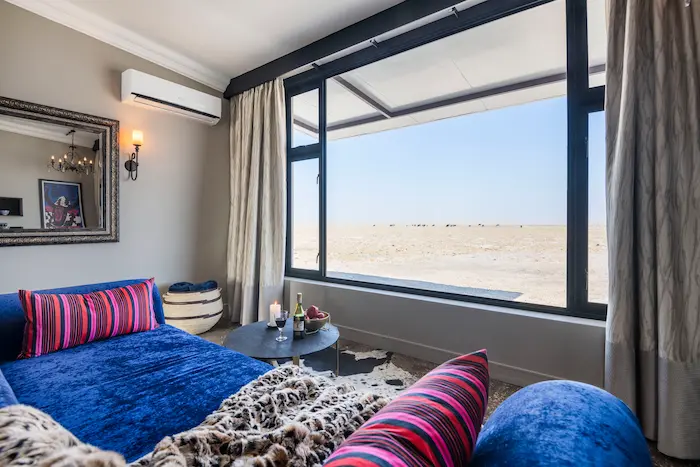
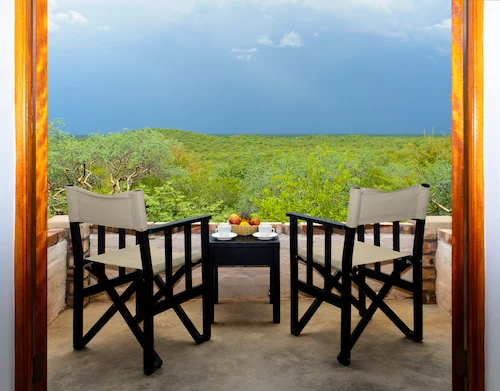
Staying inside the park (Okaukuejo, Halali or Namutoni) gives you the floodlit waterholes after dark. Staying just outside gives you more choice and often more comfort:
- Etosha Safari Lodge and Etosha Safari Camp: a few kilometres south of Andersson Gate, perfect for Okaukuejo and the western waterholes
- Etosha King Nehale: right beside the King Nehale Gate in the north, with its own waterhole and easy access to Andoni and the eastern waterholes
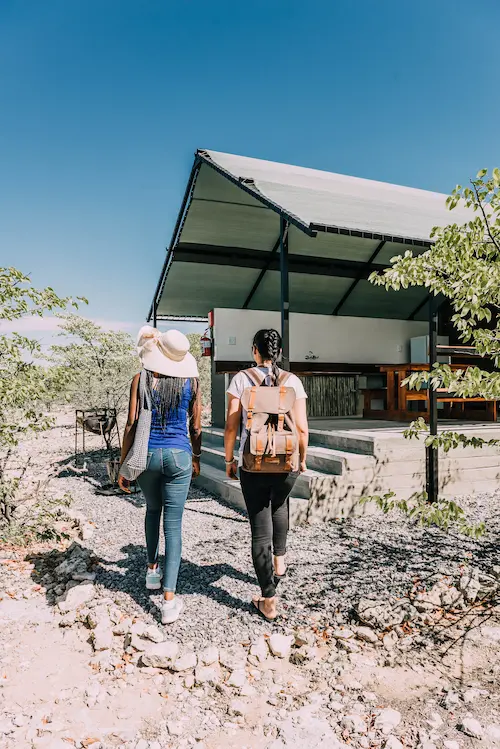
- Camping2Go tents: ready-pitched tents near the park for self-drive travellers on a budget
When to visit Etosha
The best time for waterhole viewing is July to October. From January to April the park turns green, many animals give birth and birdlife is spectacular, but wildlife spreads out because there is water everywhere. See our full guide to the best time to visit Namibia.
What you'll see at different times of day
| Time | What usually happens |
|---|---|
| Sunrise to 09:00 | Lions finishing the night's hunt, hyenas and jackals, the softest light for photos |
| 09:00 to 12:00 | Zebra, springbok, wildebeest and giraffe arrive to drink as it warms up |
| 12:00 to 15:00 | Elephant herds often come in the heat of the day to drink and cool off |
| 15:00 to sunset | Plains game return, and predators start to move |
| After dark (camp waterholes) | Black rhinos, elephants, lions and hyenas under the floodlights |
Self-drive or guided game drive?
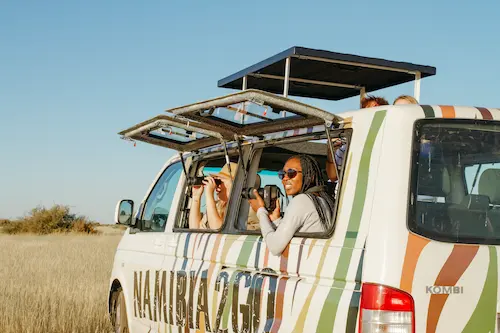
Etosha is one of Africa's best parks for self-drive safaris: the roads are good, the waterholes are signposted and you set your own pace. Guided drives, offered by the camps and the lodges outside the gates, add an expert eye and a raised vehicle. Guided night drives are the only way to explore the park after dark, when you may see nocturnal animals such as honey badgers, aardwolves and owls. Many travellers do both: a guided drive on the first morning to learn the park, then self-drive for the rest of the stay.
The sun drops behind the pan, the floodlights flicker on, and a black rhino steps out of the darkness to drink. Nobody speaks. In Etosha, some of the most powerful moments happen in complete silence.
Frequently asked questions
What is the best waterhole in Etosha?
Okaukuejo is the most famous Etosha waterhole, especially at night when it is floodlit and black rhinos often come to drink. For lions, try Okondeka; for elephants, Olifantsbad and Kalkheuwel.
Which Etosha camps have floodlit waterholes?
Okaukuejo, Halali (Moringa waterhole) and Namutoni have waterholes you can watch after dark from inside the camp.
Can you self-drive in Etosha?
Yes. Etosha has good gravel roads suitable for an ordinary car in the dry season. Stay in your vehicle outside the camps and keep to the 60 km/h speed limit.
What time do Etosha gates open?
The gates open around sunrise and close around sunset, and times change with the seasons. You must be inside your camp or out of the park before the gates close.
How many days do you need in Etosha?
Three to four nights is ideal, split between the Okaukuejo area in the west and the Namutoni area in the east, with a drive past the Halali waterholes in between.
When is the best time to see animals in Etosha?
July to October, the dry season, when animals gather at the waterholes. Early morning and late afternoon are the best times of day.
What is the best time of day to visit Etosha's waterholes?
The first and last two hours of the day are best for predators and photography, while elephants often arrive around midday. After dark, the floodlit camp waterholes are best for black rhinos.
Plan your Etosha safari
Self-drive, guided or fly-in: tell us your dates and we'll plan the best Etosha route and lodges for you.
WhatsApp Us Explore Namibia Tours