Can you see the Big Five in Namibia? Yes, but not all in one park. Etosha is excellent for lions, elephants and black rhinos, and good for leopards, but it has no buffalo. To complete the set, you need to add the green Zambezi Region in the north-east or the Waterberg Plateau. This guide explains where to find each of the Big Five in Namibia, the best time to go and how to plan a route that covers all five.
The Big Five in Namibia at a glance
- Lion: Etosha; desert-adapted lions in the north-west
- Leopard: Etosha and private reserves in central Namibia
- Elephant: Etosha, Damaraland and the Zambezi Region
- Black rhino: Etosha and the desert of the north-west
- Buffalo: the Zambezi Region and the Waterberg Plateau, not Etosha
- Best season: May to October, the dry season
Where to see each of the Big Five
King of Etosha
Lion
Etosha has a healthy lion population, and the waterholes around Okaukuejo, especially Okondeka on the edge of the pan, are known for lion sightings. In the remote north-west, a small number of desert-adapted lions survive in the dry riverbeds of the Kunene Region, and occasionally along the Skeleton Coast. Seeing them takes time and an expert guide.
Hard to spot
Leopard
Leopards live throughout Etosha but are shy and mostly active at night, so a sighting is always a bonus. Guided night drives from lodges near the park improve your chances. Private reserves in central Namibia, between Windhoek and Etosha, are known for leopard research and tracking, and can offer some of the most reliable sightings in the country.
Three kinds of habitat
Elephant
Etosha's elephants often arrive at waterholes in large herds, especially in the heat of the day. In Damaraland and the Kunene Region, desert-adapted elephants roam dry riverbeds, and in the Zambezi Region, big herds gather along the rivers. Read more in our Damaraland travel guide.
A conservation success
Black rhino
Namibia is one of the most important countries in the world for the black rhino. Etosha's floodlit camp waterholes are among the best places in Africa to see them, often after dark. In the north-west, specialist camps track desert-adapted black rhinos on foot with community rangers.
Not in Etosha
Buffalo
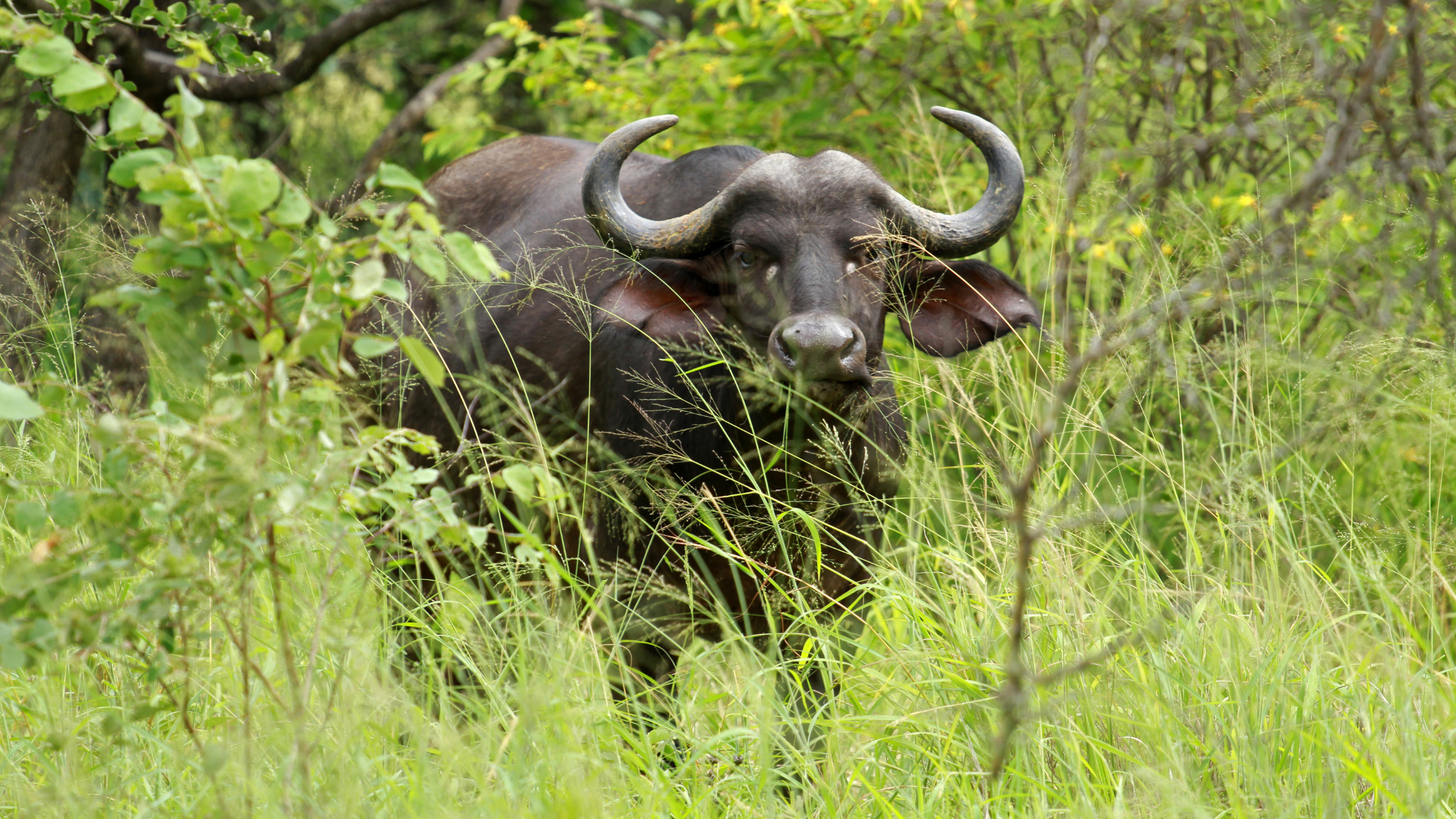
Buffalo are the missing piece in Etosha. To see them, head to the Zambezi Region in the far north-east, where herds graze the floodplains of the Kwando, Chobe and Zambezi rivers, or to the Waterberg Plateau Park, which protects a disease-free herd on top of the plateau.
Where to see the Big Five at a glance
| Animal | Etosha | Damaraland and Kunene | Zambezi Region | Waterberg |
|---|---|---|---|---|
| Lion | Very good | Rare (desert lions) | Possible | No |
| Leopard | Possible | Possible | Possible | Possible |
| Elephant | Very good | Good (desert elephants) | Very good | No |
| Black rhino | Very good | Good with a tracker | Rare | Possible |
| Buffalo | No | No | Good | Possible |
Sightings are never guaranteed anywhere, and conditions change from year to year, but this gives a good sense of where your chances are best.
A route to see all five
The easiest way to see all of the Big Five in one trip is to combine Etosha with the Zambezi Region, also known as the Caprivi. A typical route looks like this:
| Days | Where | Big Five focus |
|---|---|---|
| 1–2 | Windhoek to the Waterberg Plateau | Rhino and buffalo on guided plateau drives |
| 3–6 | Etosha National Park, west and east | Lion, elephant, black rhino, and a chance of leopard |
| 7–10 | The Zambezi Region | Buffalo and elephant herds, river cruises, hippos and crocodiles |
| 11–12 | Continue to Victoria Falls or fly back to Windhoek | A spectacular end to the trip |
If you'd rather focus on the desert, swap the Zambezi Region for Damaraland and the Kunene: you'll trade buffalo for desert elephants, desert rhinos and some of Africa's wildest scenery.
When to go
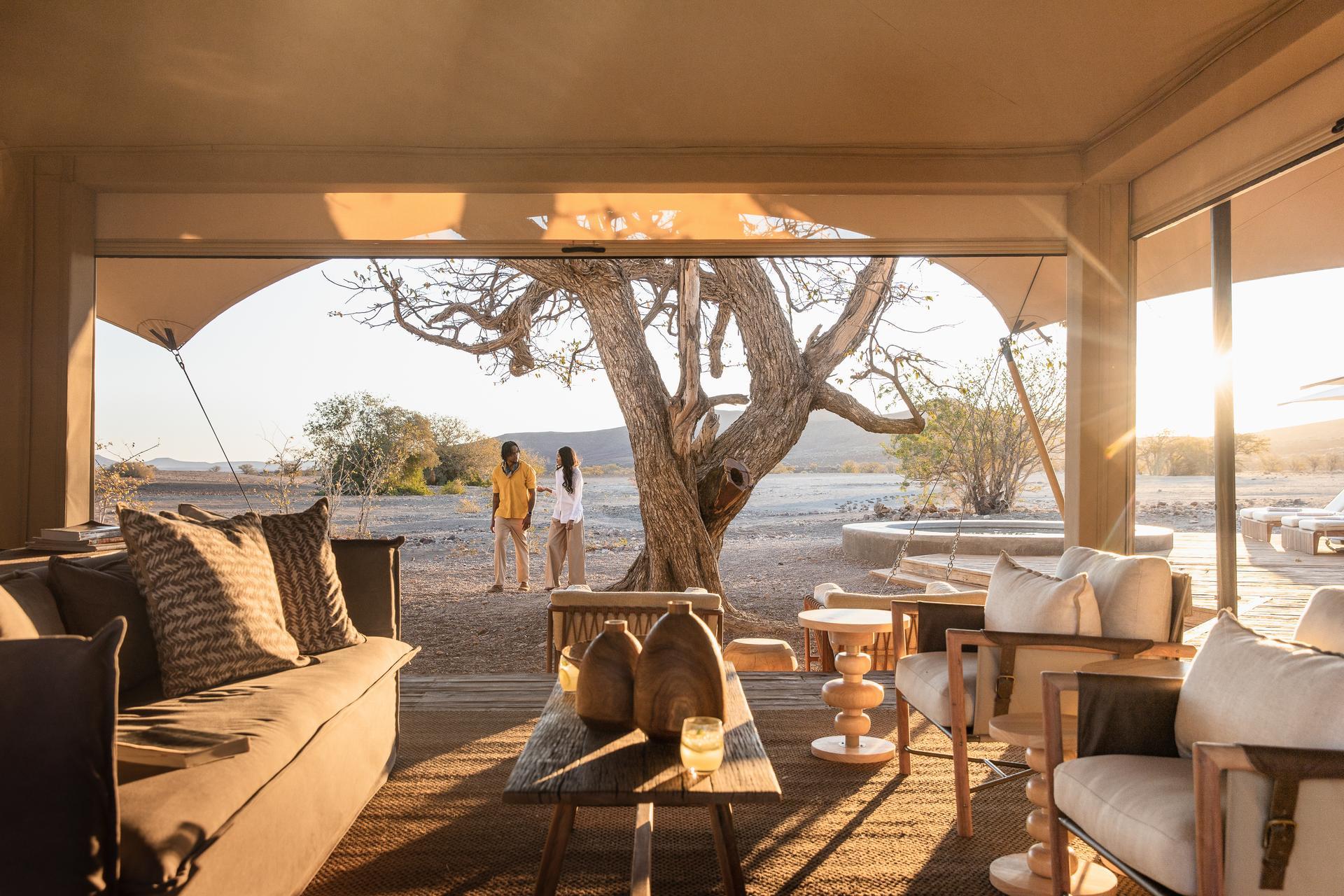
The dry season, from May to October, is the best time for Big Five sightings. Water becomes scarce, grass dies back, and animals gather at waterholes and rivers, where they are much easier to find. July to October is the peak. In the green season, from about December to April, animals spread out across the plains, but the landscapes are lush and many animals have young. See our guide to the best time to visit Namibia.
More than the Big Five
Namibia's wildlife goes far beyond the famous five. It has one of the largest wild cheetah populations in the world, and you may see cheetahs hunting on Etosha's open plains. Look out for spotted and brown hyenas, giraffes, huge herds of zebra and springbok, the elegant oryx, and the tiny Damara dik-dik. On the coast, there are seal colonies, dolphins and flamingos, and in the dunes, the "Little Five" of the desert: the Namaqua chameleon, the sidewinder adder, the palmato gecko, the shovel-snouted lizard and the dancing white lady spider.
Tips for Big Five sightings
- Be patient at waterholes: park, switch off your engine and wait 20 to 30 minutes. See our guide to the best Etosha waterholes.
- Go out early and late: predators are most active around sunrise and sunset.
- Stay a night inside Etosha: the floodlit camp waterholes are the best place to see black rhinos.
- Book a guided night drive: your best chance of leopard.
- Bring binoculars: one pair per person makes a big difference.
- Respect the animals: keep your distance, never get out of your vehicle in the parks, and never chase a sighting.
Self-drive or guided Big Five safari?
Etosha is one of the easiest parks in Africa for a self-drive safari, and many travellers find lions, elephants and rhinos on their own. A guide adds a lot, though. Guides know where the animals have been seen, read tracks you'd drive straight past, and are the only way to explore after dark on a night drive. Rhino tracking in the north-west and the game drives on the Waterberg Plateau are guided only. Many travellers do both: self-drive in Etosha, with one or two guided activities where they count most.
Big Five photography tips
- A 100–400 mm zoom covers most sightings; animals at waterholes are often 50 to 150 metres away.
- Use a bean bag on the car window instead of a tripod.
- Shoot in the first and last hours of light for warm colours and active animals.
- At the floodlit waterholes, raise your ISO and keep still: never use flash.
Finally, keep a simple sightings list in the car. Ticking off each animal, from the Big Five to the smallest bird, quickly becomes one of the best parts of the trip, especially for children.
Above all, enjoy every sighting, big or small.
Plan your Big Five safari
We plan Big Five routes as self-drives, guided safaris or fly-in trips. Tell us how many days you have and which animals matter most, and we'll build the route around them. Explore our Namibia tours, or start with where to stay in Etosha.
Frequently asked questions
Can you see the Big Five in Namibia?
Yes, but not in one park. Etosha has lions, leopards, elephants and black rhinos, but no buffalo. Add the Zambezi Region or the Waterberg Plateau to see buffalo.
Are there buffalo in Etosha?
No. Etosha has no buffalo. Namibia's buffalo live in the Zambezi Region in the north-east and on the Waterberg Plateau.
Where is the best place to see black rhino in Namibia?
Etosha's floodlit camp waterholes, especially at Okaukuejo, are among the best places in Africa to see black rhinos. In the north-west, specialist camps track desert-adapted rhinos on foot.
What is the best time to see the Big Five in Namibia?
The dry season, from May to October, is best, with July to October the peak, when animals gather at waterholes and rivers.
Does Namibia have cheetahs?
Yes. Namibia has one of the largest wild cheetah populations in the world, and cheetahs are often seen on Etosha's open plains.
Plan your Big Five safari
Tell us how many days you have and we'll plan a route to find all five.
WhatsApp Us Explore Namibia Tours