
Stand at the edge of the Fish River Canyon in the late afternoon and you understand why people drive a full day across the south of Namibia to get here. The river has cut a winding gorge almost 550 metres deep into the rock, and from the rim it twists away towards the horizon in layer after layer of red, grey and gold. This guide covers how to visit, where to stay, when the famous hiking trail is open and how to add the south to your Namibia trip.
Fish River Canyon at a glance
- Where: far southern Namibia, in the ǀAi-ǀAis/Richtersveld Transfrontier Park
- Size: about 160 km long, up to 27 km wide and almost 550 m deep
- Main viewpoint: near Hobas, at the northern end
- Hot springs: ǀAi-ǀAis, at the southern end
- Best time: May to September, when days are mild and the hiking trail is open
How big is the Fish River Canyon?
It is the largest canyon in Africa. Measured end to end it runs for roughly 160 kilometres, it is up to 27 kilometres wide in places, and at its deepest it drops about 550 metres to the river below. The upper and lower canyon were declared a national monument in 1962. The scale is hard to take in from photos: the river you see far below is a thin silver line, and the bends of the canyon fold back on themselves so often that you can trace its path for kilometres from a single viewpoint.
The rock tells a long story. The lowest layers are among the oldest exposed rock in southern Africa, and the canyon itself was shaped over millions of years by movement in the earth's crust and, later, by the river cutting down through it. You don't need to be a geologist to enjoy it, but a guide who can point out the layers adds a lot to the view.
Visiting the canyon rim
Most visitors see the canyon from the viewpoints near Hobas, the park's northern entrance. From the Hobas office it is a short drive of about 10 kilometres on gravel to the main viewpoint, where a walkway runs along the edge. Other lookouts further along the rim give different angles over the famous Hell's Bend, where the river doubles back on itself.
Timing makes a big difference. In the middle of the day the light is flat and the heat bounces off the rock. Aim to arrive about an hour before sunset, when the low sun lights up the canyon walls and the shadows show its depth. Sunrise is quieter and just as beautiful, if you're staying nearby.
- Bring water and a hat: there is little shade along the rim.
- Stay behind the barriers: the edges are sheer and the rock can be loose.
- Pay park fees at Hobas before driving to the viewpoints.
The Fish River Canyon hiking trail
For experienced hikers, walking the canyon floor is one of Africa's great adventures. The trail runs from the Hobas area down into the canyon and follows the river south to ǀAi-ǀAis, a distance of roughly 85 to 90 kilometres depending on the shortcuts you take. Most groups take four to five days.
This is a serious, unsupported hike. There are no facilities, no marked path for much of the way and no mobile signal. You carry everything you need, camp on the sand, and cross the river many times. Fires are not allowed, so you cook on a gas stove. There are only two emergency exit points.
| Rule | What to know |
|---|---|
| Season | Permits are only issued in the cooler months, usually from about May to mid-September. Dates can change: in 2026, high water delayed the opening to 17 July |
| Group size | A minimum of three hikers per group |
| Age | Children under about 12 are not allowed |
| Fitness | A medical certificate signed by a doctor, confirming you are fit for the hike |
| Booking | Permits through Namibia Wildlife Resorts, well in advance; school holidays fill first |
| Transport | A shuttle links ǀAi-ǀAis and Hobas; book it ahead |
Because rules and dates are confirmed each season, always check the latest information with Namibia Wildlife Resorts before you plan your hike. For the full trail, day by day, read our Fish River Canyon hiking guide.
ǀAi-ǀAis hot springs
At the southern end of the canyon, where the hiking trail finishes, the hot springs of ǀAi-ǀAis bubble up from deep underground. The name is usually translated from the Nama language as “burning water”, and the spring water feeds a resort with pools, chalets and camping. After five days on the trail, a long soak here is a famous reward. If you're not hiking, it still makes a relaxing stop on a drive through the south.
Where to stay near the Fish River Canyon
Near the rim
Gondwana Canyon Park
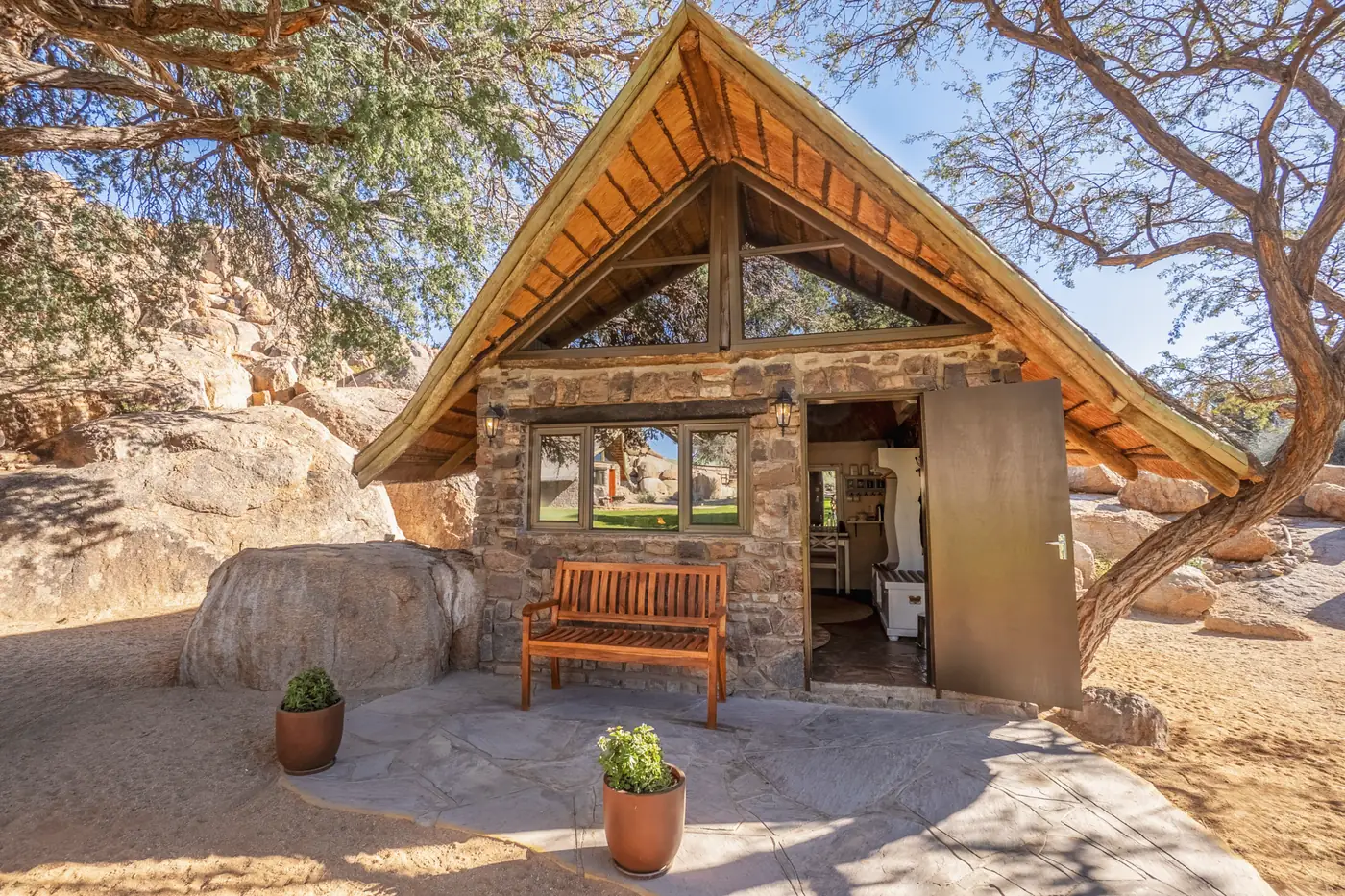
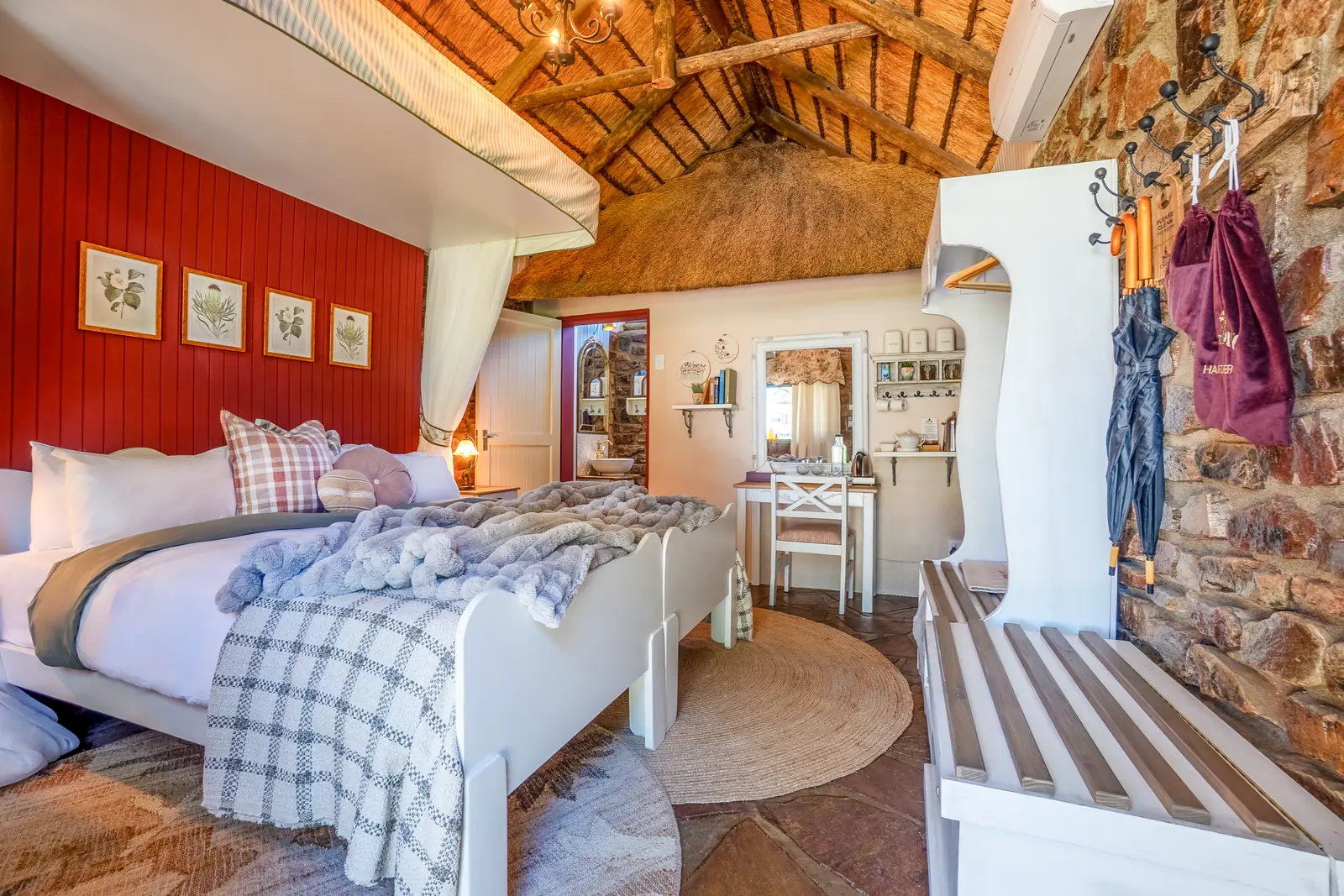
A private reserve right beside the national park, home to three Gondwana properties with very different characters: Canyon Lodge, with stone chalets tucked between boulders; Canyon Village, built in a Cape Dutch style; and Canyon Roadhouse, a quirky stop decorated with vintage cars. All are a short drive from the main viewpoint.
Inside the park
Hobas campsite
A shaded campsite near the park entrance and the start of the hiking trail.
Hot springs
ǀAi-ǀAis resort
Rooms, chalets and camping at the southern end of the canyon, with access to the hot spring pools.
When to visit
| Months | Conditions | Good for |
|---|---|---|
| May–September | Mild, clear days and cold nights | Viewpoints, photography and the hiking trail |
| October–November | Hot days | Quiet roads and lodges; visit the rim early or late |
| December–April | Very hot on the canyon floor, occasional storms | Rim viewpoints only; the trail is closed |
For the rest of the country month by month, see our guide to the best time to visit Namibia.
Getting there
The canyon is in the far south of Namibia, a long day's drive from Windhoek, so most travellers break the journey. The closest town of any size is Keetmanshoop, around two hours away. Roads into the park are gravel, so drive carefully, keep your speed down and fill up with fuel whenever you can. Our Namibia travel tips cover driving on gravel in more detail.
How long to stay
One night is enough to see the rim at sunset and sunrise. Two nights let you add ǀAi-ǀAis or a scenic drive in Gondwana Canyon Park without rushing. Hikers need at least five nights in the area, allowing for the hike itself and the transfers at each end.
Make it part of a southern Namibia route
The Fish River Canyon sits at the heart of a route that many visitors skip, which is exactly why it feels so special. Popular stops nearby include:
- The Quiver Tree Forest near Keetmanshoop: a stand of strange, tree-like aloes that glow at sunset.
- Lüderitz and Kolmanskop: a small harbour town on the Atlantic, and the sand-filled ghost town of an early 1900s diamond rush.
- The wild horses near Aus: seen at a waterhole on the road to Lüderitz.
- The Orange River: on the South African border, popular for gentle canoe trips.
From the canyon, many routes continue north through the Namib to Sossusvlei. We plan southern Namibia routes as self-drives, guided tours or combined with the north: browse our Namibia tours or ask us for a route made for you.
Frequently asked questions
How big is the Fish River Canyon?
The Fish River Canyon is the largest canyon in Africa: about 160 km long, up to 27 km wide and almost 550 m deep at its deepest point.
When is the Fish River Canyon hike open?
Permits are only issued in the cooler months, usually from about May to mid-September. Dates are set each season by Namibia Wildlife Resorts and can change; in 2026, high water delayed the opening to 17 July.
How long is the Fish River Canyon hike?
The trail is roughly 85 to 90 km from the Hobas area to Ai-Ais, and most groups take four to five days.
Where should I stay near the Fish River Canyon?
Gondwana Canyon Park, next to the national park, has Canyon Lodge, Canyon Village and Canyon Roadhouse. There is also camping at Hobas and a resort at the Ai-Ais hot springs.
Can you visit the Fish River Canyon without hiking?
Yes. Most visitors drive to the viewpoints near Hobas, about 10 km from the park office, and many also stop at the Ai-Ais hot springs.
Add the Fish River Canyon to your journey
Tell us how long you have and we'll plan a southern Namibia route around the canyon.
WhatsApp Us Explore Namibia Tours