
Rugged mountains, ancient rock engravings and elephants that have learned to survive in the desert: Damaraland is one of Namibia's most dramatic regions. This Damaraland travel guide covers what to see and do, from Twyfelfontein and Spitzkoppe to the Brandberg and the Petrified Forest, plus where to stay and how long you need.
Damaraland at a glance
- Where: North-western Namibia, between the Skeleton Coast and Etosha
- Main town: Khorixas
- Highlights: Twyfelfontein, Spitzkoppe, the Brandberg, desert-adapted elephants
- Best season: May to October
- Ideal stay: 2 to 3 nights
Where is Damaraland?
Damaraland is the name commonly used for the region in north-western Namibia, roughly between the Ugab River in the south and the Hoanib River in the north. It sits on the classic route between Swakopmund and Etosha, which makes it an easy and rewarding stop on most Namibia tours.
Things to see and do in Damaraland
UNESCO World Heritage
Twyfelfontein rock engravings
Namibia's first UNESCO World Heritage Site holds one of Africa's largest collections of rock engravings, with well over 2,000 figures of giraffes, rhinos, lions and human footprints carved into the sandstone thousands of years ago. A local guide leads you along the trails.
Geology
Burnt Mountain and the Organ Pipes
Close to Twyfelfontein, Burnt Mountain glows in shades of purple and black at sunset, while the Organ Pipes are a gully of tall, angular rock columns formed by cooling lava.
Ancient trees
The Petrified Forest
West of Khorixas, huge tree trunks turned to stone lie scattered across the ground, estimated to be around 280 million years old. You'll also see welwitschia plants here.
Namibia's highest mountain
The Brandberg
A vast granite massif rising from the plains, home to Namibia's highest peak, the Königstein. Guided walks lead to the famous "White Lady" rock painting.
The Matterhorn of Namibia
Spitzkoppe
Striking granite peaks that rise straight out of the desert, with natural rock arches, ancient paintings and some of the best sunsets and stargazing in Namibia. Camping here is unforgettable.
Culture
Damara Living Museum
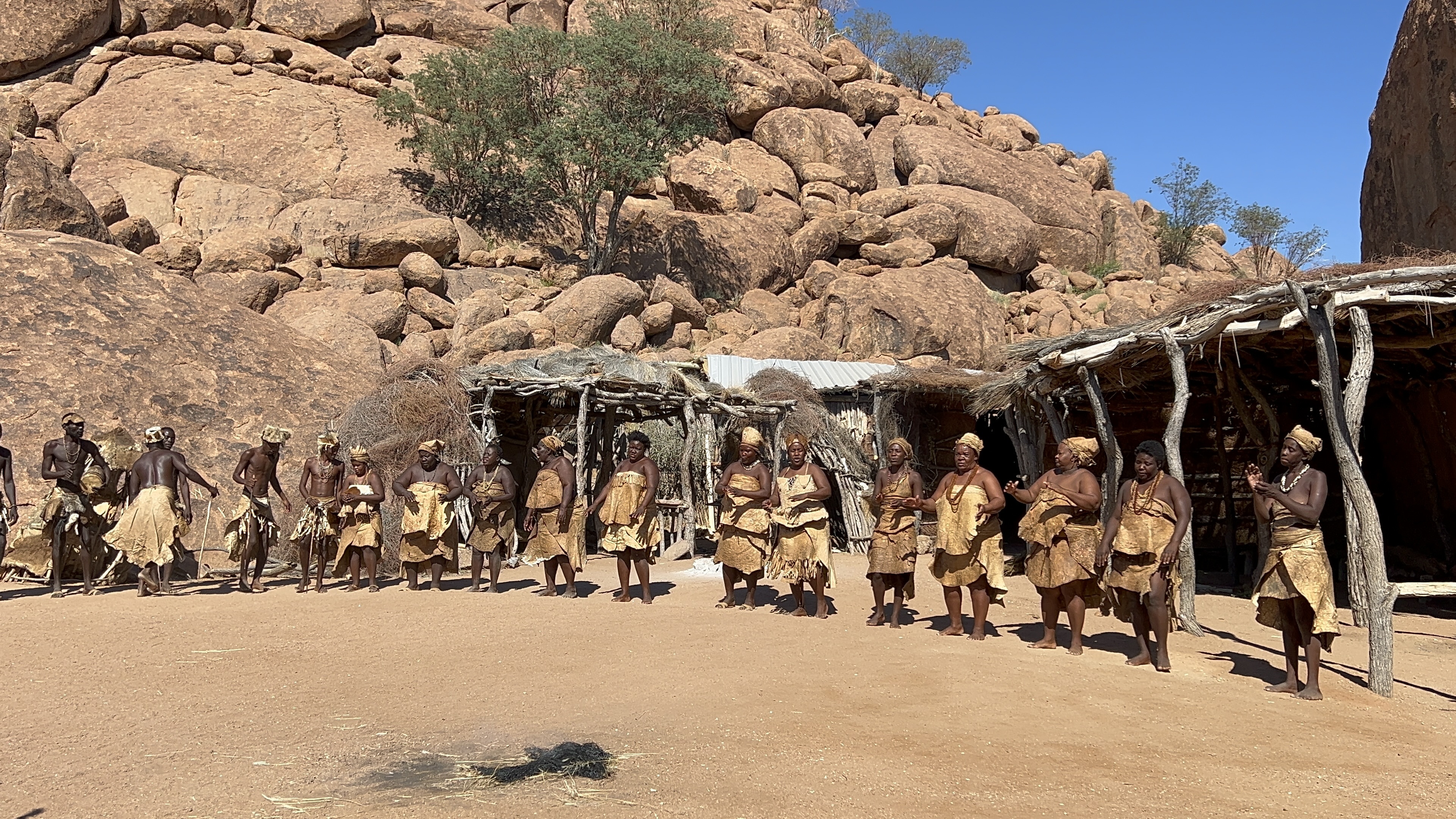
Near Twyfelfontein, members of the Damara community share traditional skills, songs, crafts and the art of making fire, giving you a living picture of their culture.
Desert-adapted elephants and rhinos
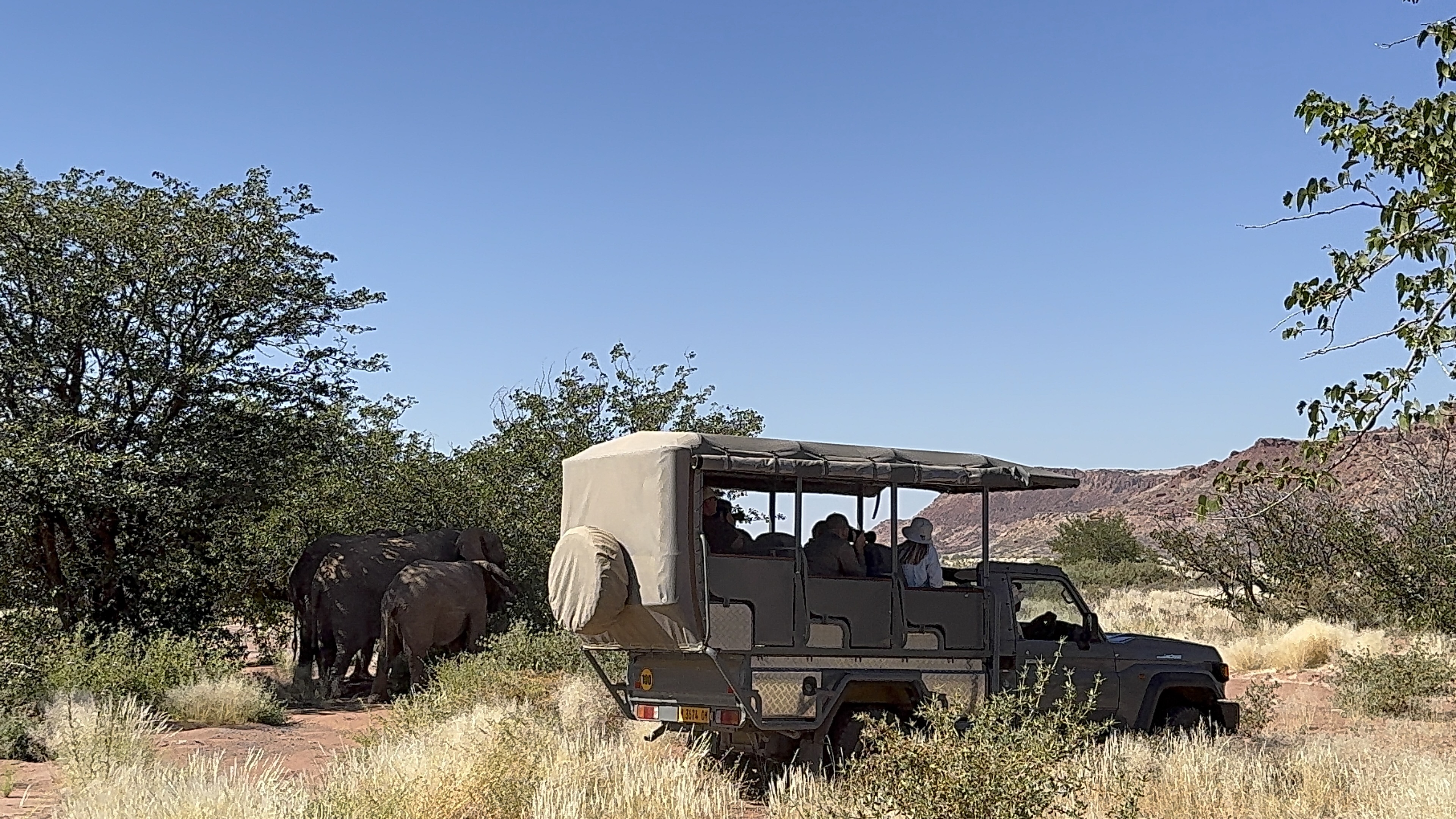
Damaraland is one of the few places in the world where elephants and black rhinos live in a true desert. The elephants walk long distances between water sources along dry riverbeds such as the Huab and Aba-Huab. Guided drives from local lodges and conservancies give you the best chance of finding them, while rhino tracking on foot is offered in the Palmwag area with expert trackers. Always go with a guide: these animals are wild and the terrain is difficult.
Where to stay in Damaraland
Community partnership
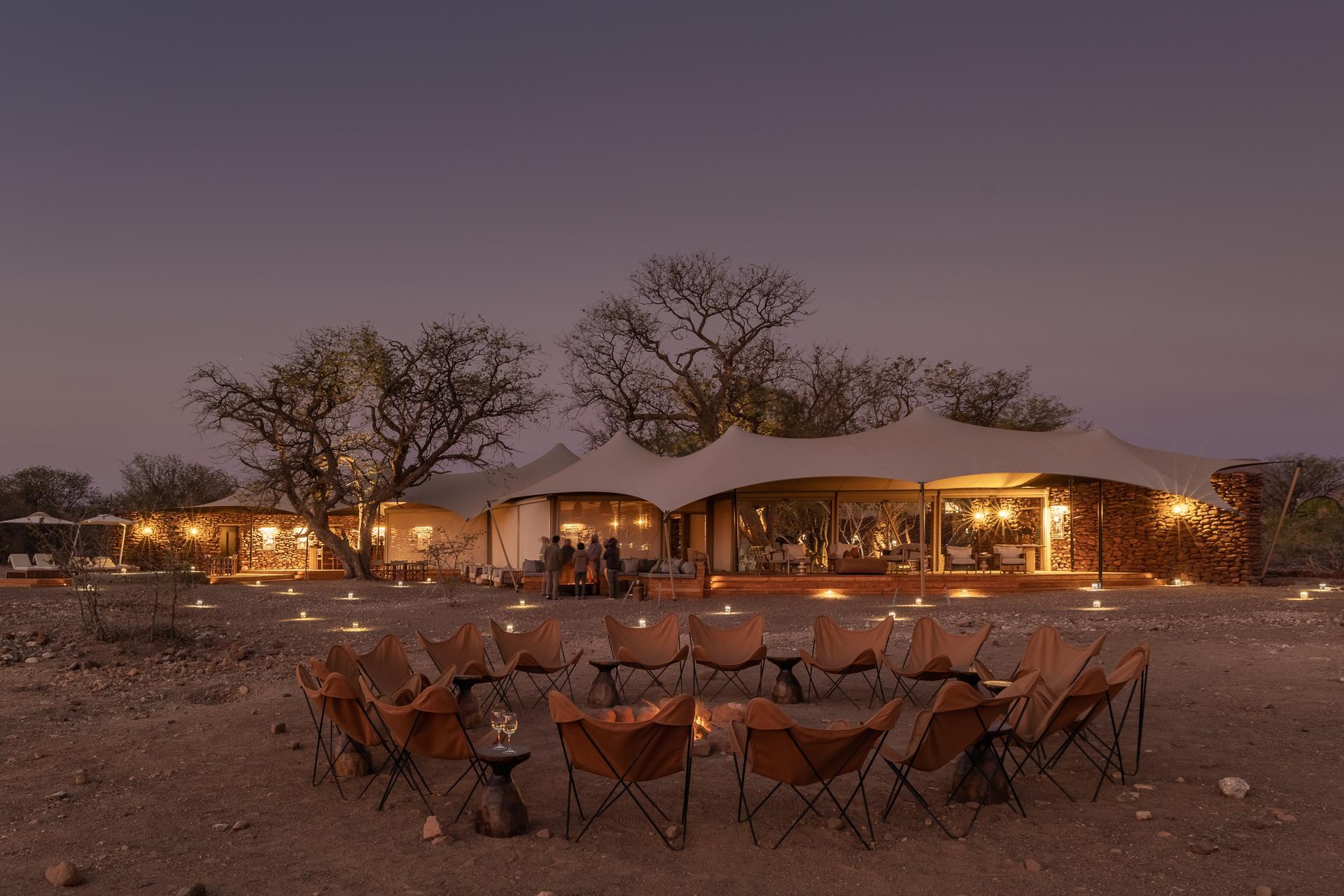
Damaraland Camp
A Wilderness camp in the Huab River valley, run in partnership with the local community, with sweeping views and guided elephant drives.
Near Twyfelfontein
Doro Nawas
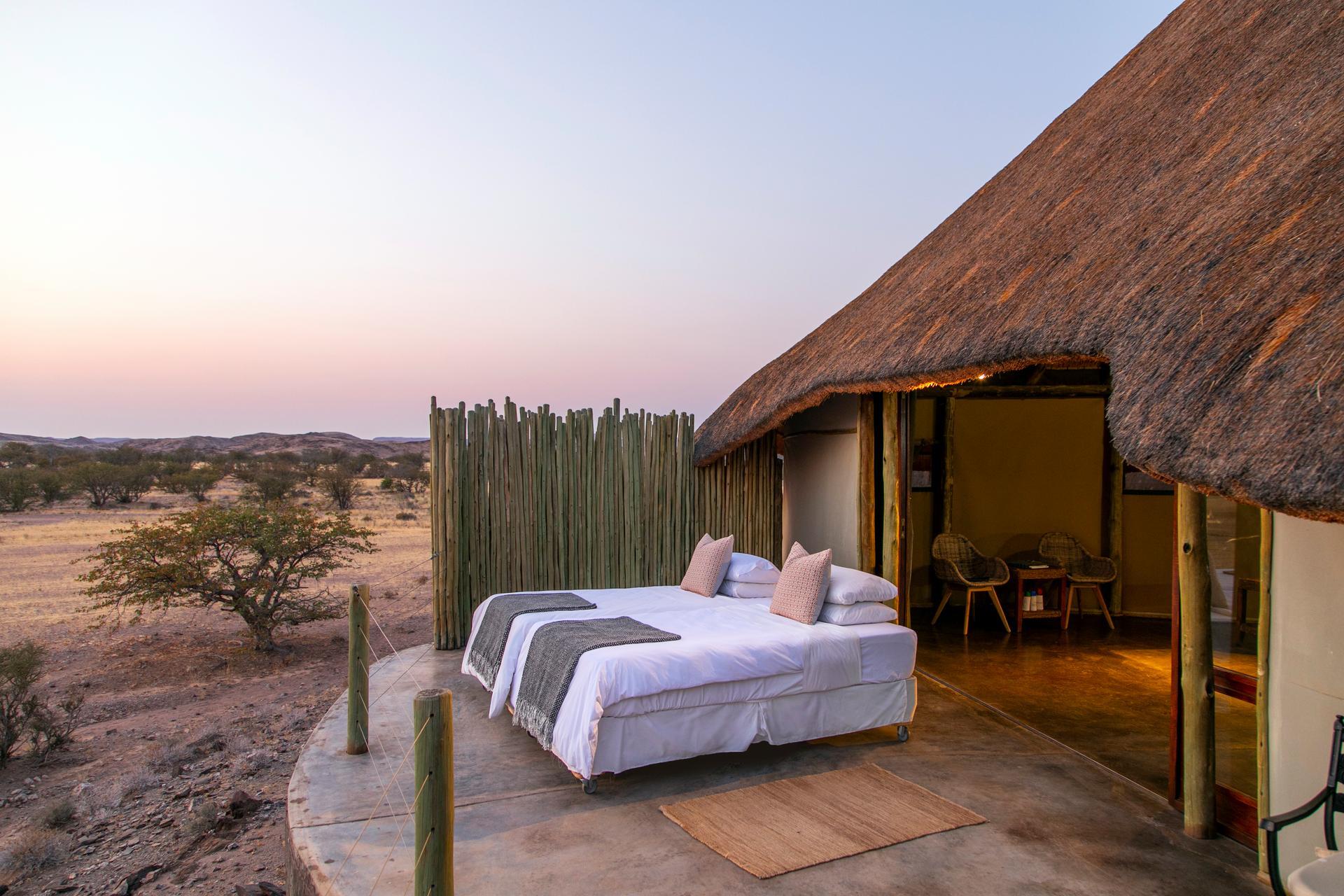
On a rocky outcrop overlooking the Aba-Huab valley, with rooftop sleep-outs and easy access to Twyfelfontein.
Rhino tracking
Desert Rhino Camp
In the Palmwag concession, focused on tracking desert-adapted black rhinos on foot and by vehicle.
Good value
Damara Mopane Lodge
Near Khorixas, chalets set around their own vegetable gardens, with a pool and a sundowner viewpoint. A good base for Twyfelfontein and the Petrified Forest.

How many days do you need in Damaraland?
Two nights gives you time for Twyfelfontein, Burnt Mountain and a desert elephant drive. With three nights, add the Brandberg or a rhino tracking excursion. Spitzkoppe is often visited on the way to or from Swakopmund. See our guide to things to do in Swakopmund and Walvis Bay.
Damaraland travel tips
- Drive slowly: gravel roads are long, dusty and can be sandy, so a 4x4 or high-clearance vehicle is best.
- Fill up at Khorixas or Uis, as fuel stations are few and far between.
- Never approach desert elephants on foot, and keep a respectful distance in your vehicle.
- Visit Twyfelfontein early before the heat of the day.
- Check the season: May to October is best for comfortable temperatures. See the best time to visit Namibia.
A 3-day Damaraland route
| Day | Route | Highlights |
|---|---|---|
| Day 1 | Swakopmund to Spitzkoppe, then on to Uis or the Brandberg area | Granite arches, rock paintings, sunset at Spitzkoppe |
| Day 2 | Brandberg to Twyfelfontein | Morning walk to the White Lady rock painting, afternoon at Twyfelfontein, Burnt Mountain and the Organ Pipes |
| Day 3 | Twyfelfontein towards Etosha via the Petrified Forest | Desert elephant drive at dawn, then the Petrified Forest and the drive east to Etosha |
Driving times on Damaraland's gravel roads are longer than the distances suggest, so plan for no more than four or five hours on the road each day and arrive before dark.
Visiting Twyfelfontein and the Brandberg
At Twyfelfontein, visits are led by local guides on set walking routes, which helps protect the engravings and supports the community. The walk takes about an hour and is rocky in places, so wear closed shoes and go early before the rocks heat up. At the Brandberg, the famous White Lady painting is reached on a guided walk of roughly an hour each way along a dry riverbed. Carry water and a hat: there is little shade.
Seeing the desert-adapted elephants responsibly
The elephants of Damaraland roam along dry riverbeds such as the Huab, Aba-Huab and Ugab, sometimes walking long distances between water points. Because they move so much, sightings are never guaranteed, and the best way to find them is with an experienced local guide on a lodge drive. Guides know the herds, read the tracks and keep a distance that doesn't stress the animals. If you are driving yourself and meet elephants, stop, switch off the engine and let them pass. Never get between a mother and her calf.
Community conservancies: why they matter
Much of Damaraland is made up of communal conservancies, areas where local communities manage the wildlife and share the income from tourism. Since Namibia's conservancy programme began in the 1990s, wildlife numbers in the north-west have recovered, including desert-adapted elephants and black rhinos. When you stay at a conservancy lodge or hire a local guide, part of what you pay goes straight back to the people who live alongside these animals.
What to pack for Damaraland
Bring closed walking shoes for the rocky paths at Twyfelfontein and the Brandberg, a wide-brimmed hat, sunscreen and at least two litres of water per person each day. Evenings in the dry season can be cool, so pack a fleece. Binoculars help with spotting elephants along the riverbeds. Our Namibia packing list covers the full trip.
An elephant walks slowly down a dry riverbed, leaving giant footprints in the sand, while the mountains turn red in the evening light. Damaraland doesn't shout. It whispers, and you never forget what it tells you.
Frequently asked questions
Where is Damaraland in Namibia?
Damaraland is in north-western Namibia, between the Skeleton Coast and Etosha National Park. Khorixas is the main town, and Twyfelfontein is its most famous site.
What is Damaraland known for?
Damaraland is known for the Twyfelfontein rock engravings, the Brandberg and Spitzkoppe mountains, the Petrified Forest and its rare desert-adapted elephants and black rhinos.
How many days do you need in Damaraland?
Two to three nights is ideal, giving you time for Twyfelfontein, a desert elephant drive and either the Brandberg or rhino tracking.
Do you need a 4x4 for Damaraland?
A 4x4 or high-clearance vehicle is strongly recommended. Roads are mostly gravel and can be sandy, especially around dry riverbeds.
Can you see desert elephants in Damaraland?
Yes. Desert-adapted elephants roam the dry riverbeds such as the Huab and Aba-Huab. A guided drive from a local lodge gives you the best chance of finding them.
Can you self-drive in Damaraland?
Yes. A 4x4 or high-clearance vehicle is best for the gravel roads. Keep daily drives to four or five hours, fill up at Khorixas or Uis, and use local guides for Twyfelfontein, the White Lady and elephant drives.
Are desert elephant sightings guaranteed in Damaraland?
No. The elephants move long distances along dry riverbeds, so sightings are never guaranteed. A guided drive from a local lodge gives you the best chance.
Plan your Damaraland journey
Let us combine Damaraland with Etosha, the Skeleton Coast or Swakopmund on a route made for you.
WhatsApp Us Explore Namibia Tours