
A wall of red sandstone cliffs rises suddenly from the bushveld, glowing in the late afternoon sun. On top lies a hidden world of grassland and woodland, home to rhinos, buffalo and rare antelope. The Waterberg Plateau Park is one of Namibia's most underrated stops, and it sits conveniently on the route between Windhoek and Etosha. Here's what to see, how to explore it and how to fit it into your trip.
Waterberg at a glance
- Where: central-northern Namibia, about 3 hours north of Windhoek, east of Otjiwarongo
- The plateau: a sandstone table mountain roughly 50 km long, rising about 200 metres above the plains
- Wildlife: black and white rhino, buffalo, sable and roan antelope, giraffe, leopard
- Activities: hiking, guided game drives on the plateau, birding
- Ideal stay: 1 to 2 nights, on the way to or from Etosha
Why visit the Waterberg?
The Waterberg breaks up the long drive north from Windhoek and adds something different to a Namibia trip. Its steep cliffs and green slopes are very different from the desert landscapes of the south and west. Springs at the foot of the cliffs give the area its name, and the water supports lush vegetation, birdlife and wildlife.
The plateau's isolation made it a natural sanctuary. It was declared a protected area in 1972, partly to protect rare and endangered animals, and over the years species such as rhinos, buffalo and rare antelope were moved here for safekeeping. It remains an important conservation area today.

Things to do at the Waterberg
On foot
Hike to the plateau viewpoint
Short trails start near the rest camp and climb through the trees and boulders to the top of the cliffs, where the view stretches for kilometres across the plains. The climb is steep in places but short, and it's best done in the early morning or late afternoon. Watch out for dassies, klipspringers and baboons on the rocks.
On the plateau
Guided game drives
Private vehicles aren't allowed on top of the plateau, so guided game drives are the way to see its wildlife. Drives visit waterholes and hides where you may see rhinos, buffalo, sable and roan antelope, eland and giraffe. Book at the rest camp or through your lodge.
For birders
Birdwatching
More than 200 bird species have been recorded at the Waterberg. Look for Rüppell's parrot, Bradfield's hornbill and colourful rock-dwelling species around the cliffs. The cliffs have also been home to vultures over the years, and conservation projects work to protect them.
For hikers
Longer guided trails
In the cooler months, guided multi-day trails have been offered on the plateau, for small groups of fit hikers. Check availability and booking rules well in advance, as they change from season to season.
Wildlife on the plateau
The Waterberg is one of the few places in Namibia where you can see both black and white rhino, and it's also home to buffalo, one of the Big Five animals you won't find in Etosha. Read more in our guide to the Big Five in Namibia. Rare antelope such as sable, roan and tsessebe live here too, along with leopards, brown hyenas and many smaller animals. As always, sightings are never guaranteed, and patience at the waterholes is rewarded.
A place of remembrance
The Waterberg is also a place of deep historical significance. In August 1904, during the colonial war, German forces attacked the Herero people here, and many thousands of Herero were then driven into the dry Omaheke desert to the east, where large numbers died. In 2021, Germany formally acknowledged these events as genocide. Graves and memorials in the area mark this history, and Herero communities hold commemorations each year. Visitors are welcome to learn about it, and a local guide can explain its meaning for Namibia today.
Where to stay
Inside the park
Waterberg Resort
The rest camp run by Namibia Wildlife Resorts sits at the foot of the cliffs, with chalets, camping, a restaurant and a pool fed by spring water. The hiking trails start right from the camp.
Nearby
Private lodges and guest farms
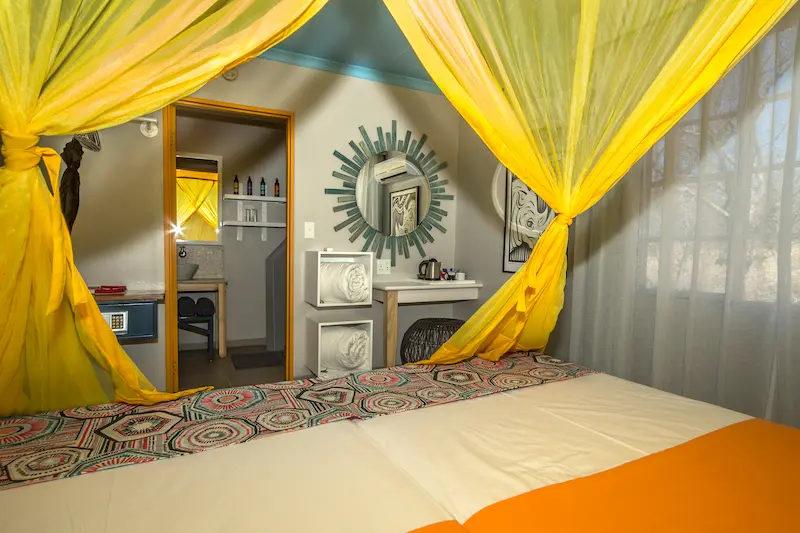
Several lodges and guest farms around the plateau offer comfortable rooms, their own walking trails and guided activities, often with views of the cliffs.
Getting there
From Windhoek, drive north on the main tarred B1 road towards Otjiwarongo, then turn east for the final stretch to the park. The trip takes about three hours. From the Waterberg, Etosha's Andersson Gate is about three to four hours further north-west. The roads are good, but as always in Namibia, don't drive after dark.
More to see nearby
- The Cheetah Conservation Fund: a research and education centre east of Otjiwarongo, where you can learn how Namibia protects its cheetahs.
- Okonjima Nature Reserve: south of Otjiwarongo, known for leopard tracking and carnivore conservation.
- The Hoba meteorite: near Grootfontein, further north-east, the largest known single meteorite on Earth.
When to visit
| Months | Conditions | Good for |
|---|---|---|
| May–September | Dry, sunny days and cold nights | Hiking, game drives and wildlife at waterholes |
| October–November | Hot days, building storms | Early-morning walks and birding |
| December–April | Green, with afternoon thunderstorms | Lush scenery and the best birdlife |
For the full year at a glance, see our guide to the best time to visit Namibia.
A 2-night Waterberg plan
| When | Plan |
|---|---|
| Day 1 afternoon | Arrive from Windhoek, short walk around the camp and sunset at the foot of the cliffs |
| Day 2 morning | Early hike to the plateau viewpoint, then breakfast |
| Day 2 afternoon | Guided game drive on the plateau for rhino, buffalo and antelope |
| Day 3 | Morning birding at the camp, then drive on to Etosha |
What to pack
- Walking shoes with a good grip for the rocky trails
- A hat, sunscreen and water for the climb
- A warm layer for cool mornings and evenings, especially from May to September
- Binoculars for birding and spotting wildlife at the waterholes
- Swimwear for the spring-fed pool
Waterberg with children
The Waterberg works well for families. The trails near the rest camp are short enough for most children, the pool is a welcome reward after a walk, and the dassies and baboons around camp keep young visitors entertained. Keep food out of reach of the baboons, as they are bold and quick, and never feed them.
Ask at reception about game drive times when you arrive, as they are set each season and fill up quickly in the school holidays. Booking a drive for your first afternoon leaves the next morning free for a hike.
Above all, take a moment on top of the cliffs at sunset.
Add the Waterberg to your route
The Waterberg is a perfect first night after Windhoek on the way to Etosha, or a final stop on the way back. Two nights let you hike in the morning, take a game drive in the afternoon and relax at the pool in between. Plan the rest of your northern route with our guides to Etosha's best waterholes and where to stay in Etosha, or explore our Namibia tours.
Photo credits: cover photo and photo in the article via Wikimedia Commons, used under their free licences. See each linked page for the photographer and licence.
Frequently asked questions
Where is the Waterberg Plateau?
The Waterberg Plateau is in central-northern Namibia, about 3 hours' drive north of Windhoek and east of Otjiwarongo, on the way to Etosha.
Can you drive yourself on the Waterberg Plateau?
No. Private vehicles aren't allowed on top of the plateau, so you explore it on guided game drives. You can hike to the plateau viewpoint from the rest camp.
What animals live on the Waterberg Plateau?
Black and white rhino, buffalo, sable, roan and tsessebe antelope, giraffe, eland, leopard and brown hyena, plus more than 200 bird species.
How long should I stay at the Waterberg?
One night breaks up the drive to Etosha. Two nights give you time for a morning hike, an afternoon game drive and a relaxed swim.
Is the Waterberg worth visiting?
Yes. It offers rhinos and buffalo, good hiking and very different scenery from the rest of Namibia, and it sits on the main route to Etosha.
Add the Waterberg to your trip
We'll fit the Waterberg in between Windhoek and Etosha, with the right lodge and activities.
WhatsApp Us Explore Namibia Tours