
Most travellers visit Namibia in the dry winter months, but those who come between November and April discover a different country: green plains, newborn animals, dramatic storm skies and lodges with space to spare. This Namibia green season guide explains what the rainy season is really like, month by month, where it stays dry, and how to plan a rewarding trip.
Green season at a glance
- When: November to April, with most rain from January to March
- Weather: hot days of 30–35°C inland, short afternoon thunderstorms
- Stays mostly dry: the coast, the Namib Desert and the south
- Highlights: green landscapes, baby animals, migrant birds, dramatic skies
- Bonus: fewer visitors and many lodges offer lower green-season rates
What is the green season in Namibia?
Namibia's rainy season is the southern hemisphere summer. Warm, moist air brings thunderstorms that build in the afternoon and usually clear by evening. In the north and centre, including Etosha, Damaraland and Windhoek, this is when nearly all of the year's rain falls. The desert and the coast receive very little. The result is a country of contrasts: lush green grass in Etosha, while the dunes of Sossusvlei stay red and dry.
For the full year at a glance, see our guide to the best time to visit Namibia. This guide focuses only on the green months.

The green season month by month
November
The build-up
The hottest, driest time of the year gives way to the first storms late in the month. Animals are still gathered at waterholes, so game viewing in Etosha can be excellent, and prices start to drop.
December
Holidays and first greens
Scattered storms turn the first patches of grass green. Christmas and New Year are busy with local and South African travellers, especially at the coast, so book early.
January
Green and growing
Regular afternoon storms in the north and centre. Many antelope, including springbok, give birth around this time, and predators follow. Migrant birds are everywhere.
February
The wettest month
The peak of the rains inland. Landscapes are at their greenest, rivers may flow and the skies are spectacular. Allow extra time on gravel roads.
March
Lush and quiet
Rains begin to ease. In years of good rain, water collects on the Etosha Pan and flamingos may arrive. One of the quietest months, with great value.
April
The sweet spot
The rains end, the air is crystal clear and the land is still green and gold. Days are warm and nights are cooler. Easter holidays can be busy.
Where to go in the green season
| Region | Green season conditions | Why go |
|---|---|---|
| Etosha | Green, with storms most afternoons | Newborn animals, predators, birdlife, fewer vehicles |
| Sossusvlei and the Namib | Mostly dry and hot | Red dunes under storm skies; go at sunrise |
| Swakopmund and the coast | Dry, cool and pleasant | Escape the heat; busy at Christmas |
| Damaraland | Green after good rains | Rare green landscapes, dramatic light |
| Kunene and Epupa Falls | Hot, humid, rivers flowing | Epupa Falls at its fullest from about March |
| The south | Very hot and mostly dry | Quiet roads; the Fish River Canyon hike is closed |
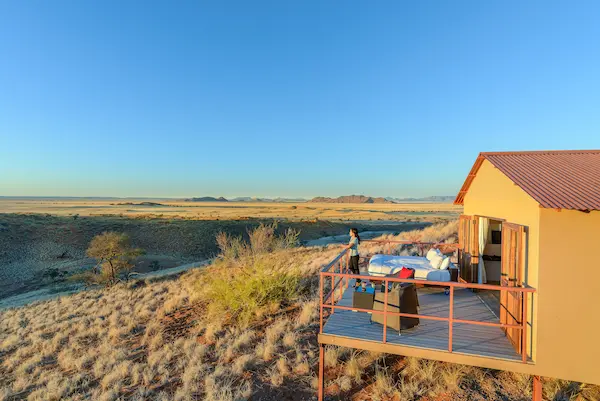
Wildlife and birds in the green season
With water and grass everywhere, animals spread out across the plains instead of gathering at waterholes, so sightings take a little more patience. In return, you see a side of Etosha most visitors miss: springbok lambs, zebra foals, plains full of grazing herds and predators hunting the young. For birders, this is the best time of year, with migrant species arriving from Europe and the rest of Africa and many resident birds in breeding plumage.
Green season travel tips
- Plan activities for the morning. Storms usually arrive in the afternoon, and mornings are often clear.
- Never cross a flowing river on a gravel road. Wait for the water to drop, which often happens within hours.
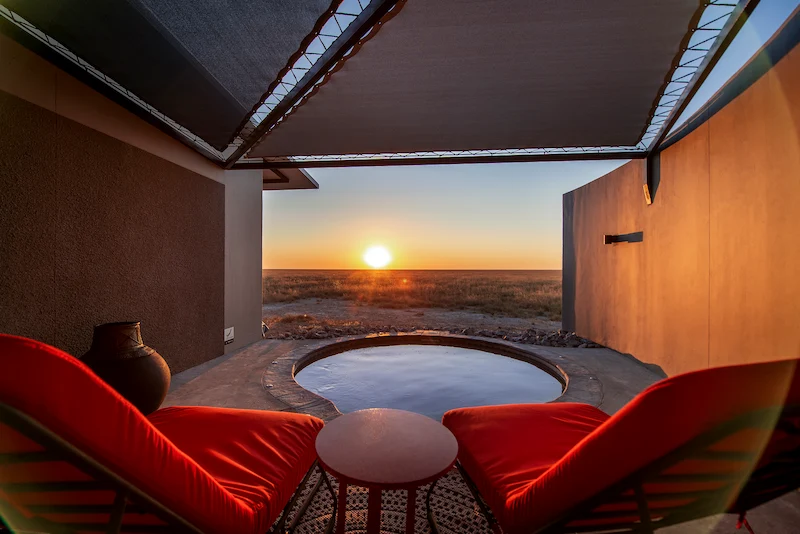
- Choose lodges with a pool and plan a midday rest during the hottest hours.
- Take malaria advice seriously in the north and north-east, where the risk rises in the rainy months. Speak to a travel clinic before you go.
- Pack light clothing, a rain jacket and insect repellent, plus a warm layer for the cooler coast.
- Book Christmas and Easter early, but enjoy quieter lodges and lower rates the rest of the season.


A 10-day green season route
- Days 1–3: Windhoek to Sossusvlei for sunrise in the dry dunes
- Days 4–5: Swakopmund for cool sea air and activities
- Days 6–7: Damaraland, green after the rains
- Days 8–10: Etosha for newborn animals, birds and storm-lit plains
Want help planning your green season trip? Explore our Namibia tours or read our Namibia travel tips.
Who the green season suits
- Photographers: storm clouds, green plains and clear air after the rain make for dramatic images.
- Birders: migrant birds arrive from Europe and the rest of Africa, and many species are in breeding colours.
- Repeat visitors: see a completely different Namibia from the dry-season postcards.
- Travellers on a budget: many lodges offer lower rates outside the Christmas and Easter holidays.
- Less suited to: first-time visitors who mainly want easy big-game sightings at waterholes, and travellers who dislike heat.
Driving in the rainy season
Most of Namibia's main routes stay open in the green season, but gravel roads can turn muddy after a storm, and dry riverbeds can fill with fast-flowing water in minutes. Ask your lodge about road conditions each morning, keep daily distances short, and leave a buffer day in your itinerary. If water is flowing across the road, wait. It usually drops within a few hours. A 4x4 with good tyres gives you the most freedom, and you should never drive at night.
Photography tips for the green season
- Shoot in the morning, when the skies are clear and the light is soft.
- Watch for storms building in the afternoon. Dark clouds behind sunlit grass make powerful images.
- Pack a rain cover for your camera and a cloth to keep lenses dry.
- Look for newborn springbok and other young animals, best photographed from a respectful distance with a telephoto lens.
Booking and prices
Outside the Christmas, New Year and Easter holidays, the green season is quieter and many lodges offer lower rates. This makes it a good time to stay at lodges that are hard to book in July or August. Some remote camps close for part of the rainy season, so check opening dates before you plan your route. Ask us to compare green-season rates for your dates when you plan your Namibia tour.
If you are unsure, consider April or early May: the rains have usually ended, the land is still green, and animals begin returning to the waterholes as the dry season starts.
The storm rolls away across the plain, the air smells of wet earth, and a newborn springbok takes its first wobbly steps. In the green season, Namibia's love story begins again.
Frequently asked questions
When is the green season in Namibia?
The green season runs from about November to April, with most rain falling between January and March as short afternoon thunderstorms in the north and centre.
Is it worth visiting Namibia in the rainy season?
Yes, especially for green landscapes, newborn animals, birdlife, dramatic skies and lower prices. The coast and the Namib Desert stay mostly dry.
Does it rain at Sossusvlei in summer?
Rain at Sossusvlei is rare, even in the green season. In exceptional years the pans can briefly fill with water, but most days are dry and hot.
Can you see animals in Etosha in the rainy season?
Yes. Animals are more spread out because water is everywhere, but you can see newborn animals, big herds on green plains and predators hunting the young.
Are roads in Namibia safe in the rainy season?
Most roads are fine, but gravel roads can be slippery and dry rivers can flood after storms. Never cross a flowing river and allow extra travel time.
Is the green season a good time for a first trip to Namibia?
It can be, especially for photographers and birders, but first-time visitors who mainly want easy big-game sightings usually prefer the dry season from May to October, when animals gather at the waterholes.
Plan your green season journey
Tell us your dates and we'll design a route that makes the most of Namibia's green months.
WhatsApp Us Explore Namibia Tours